Replacing those panels
Is it possible to improve the efficiency of our home solar panels without losing our feed-in tariff?
So previously I described how our rooftop solar panels had a small failure that resulted in a reduced generating capacity. Now that we also have an EV, I was keen to get them back working as efficiently as possible. Ideally we’d be generating as much power as possible, not only to use in our house, but also to charge the new car.
Again, I contacted a few different installers, but ended back with LAMM Solar and Electrical again. There were a couple of constraints that they understood and worked with us on:
- We’re still receiving a generous government feed-in tariff for power we send back to the grid (paid in addition to any input rate on our electricity plan)
- We don’t have heaps of money to throw at a huge upgrade.
The first point is important. As I understand it, if you make any significant changes to your system, like increasing capacity or installing a battery, then the government tariff gets cancelled. So if at all possible, I’d prefer to keep that until it runs out in a couple of years.
Adam from LAMM patiently came up with a few different options to choose from that all kept any changes compliant. As long as the new system didn’t exceed the capacity of the original then the feed-in tariff would continue.
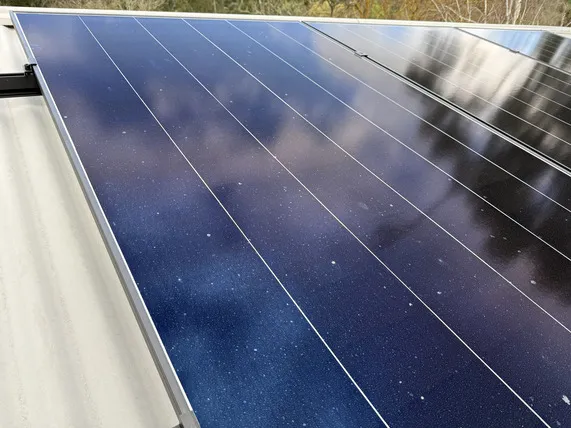
One thing I hadn’t considered was that solar panel technology has advanced a lot since our original panels were installed. The old system consisted of 24 x 190W panels.
The new system is 9 x 500W panels - and as it takes up a lot less roof space, it gives us physical room to expand in the future.
The alignment of the original panels was in two strings - with a longer one more north-aligned. It was great in Summer, but shaded by trees a lot more in Winter. The second string was at a slightly less north-facing angle, but not impacted by trees, so it could be relied on to keep generating through the whole year.
The replacement installation kept the second string. The plan was to put all 9 panels in that position, but on the day of installation we realised that they were just a bit too big to fit, so 3 panels were put on a different part of the roof. Those will pick up more afternoon sun and should also do well over Summer.
One slight annoyance was to discover that the government incentives for installing solar actually meant it was cheaper to put in a brand new inverter, rather than keep the perfectly fine one we had (it was only a few years old, having replaced the original inverter when that became faulty).
In a similar way, there wasn’t much that could be done with the remaining old panels. If I had a farm shed or something similar I might have been able to repurpose them in some off-grid system, but I don’t have any such thing. Even donating them to someone else would not be worth it, as I was informed that the cost of reinstallation would outweigh any savings compared to just putting in a new system. A shame but not much I could do about that.
Home Assistant monitoring
The new inverter is a GoodWe brand, and Home Assistant has support for that built in with the GoodWe Inverter integration.
I had read the documentation for that integration which mentioned you needed the Modbus TCP option enabled. That wasn’t on by default. I want to give an extra thanks to the LAMM installers (Liam, Ethan and Ben), as they not only completed the installation but were happy to stay on a bit longer and adjust the inverter settings for me until the HA integration worked. That was much appreciated.
One advantage to getting a new inverter is it comes with a CT (Current Transformer) clamp. This allows it to monitor the electrical current in the mains connection. With that in place, you are able to see the actual amount of electricity that is being consumed by the house (in addition to any that is being generated by the solar panels).
I wish I’d started using Home Assistant much earlier, as I would have had a much longer history to compare with. As it is, here’s a couple of months of the old system (and bear in mind it is Winter here in Adelaide, so any sunshine peaking through the clouds this time of year is a bonus!)
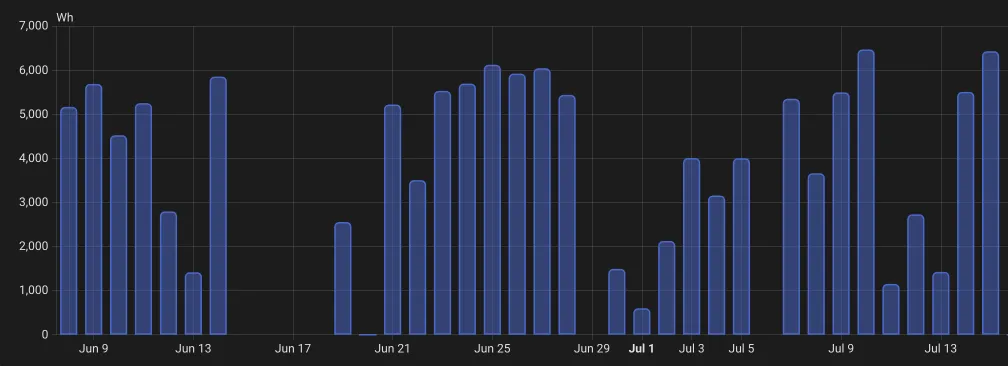
The new panels are already proving their worth. Whereas the old panels were lucky to get 6 kWh maximum, the new ones seem to have that as almost a daily minimum!
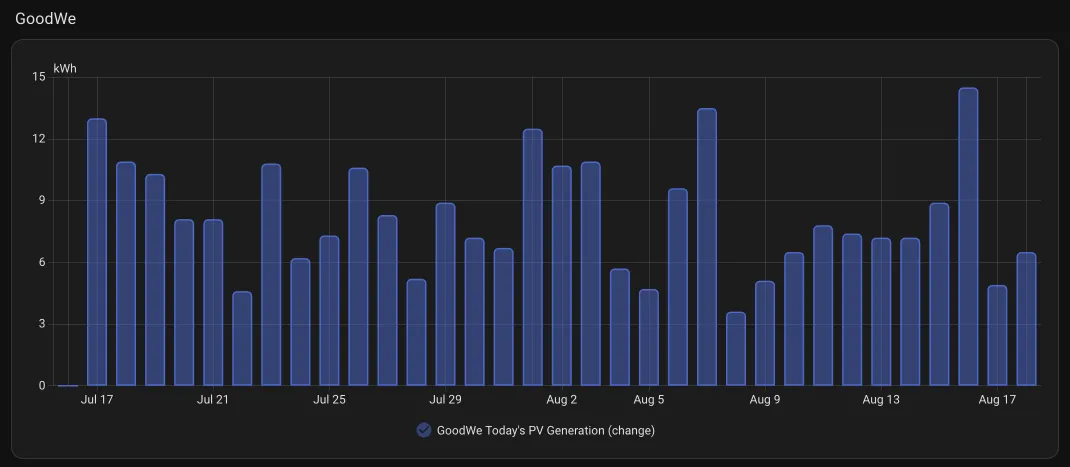
Replacing the panels was an unplanned expense, but the proceeds from selling the old Kia Sorento car ended up covering a good portion of the cost.
There’s one other thing that I got LAMM Solar and Electrical to install on the day. I’ll talk about that more in another post!